



Physical Delivery in Commodity Trading





Key takeaways
- Depending on the contract specifications, commodity contracts traded on exchanges such as the MCX can be settled in cash or by physical delivery.
- Physical delivery involves the seller delivering the actual commodity that is being sold (e.g., gold, silver, base metals, agricultural products) to a warehouse approved by the exchange, and the buyer agrees to make full payment and take delivery.
- Physical delivery can involve quality verification, warehousing, logistics and electronic commodity or warehouse receipts, depending on the contract.
- Retail traders commonly square off or roll over their trades before the tender period to avoid the physical delivery of the contract.
Commodity trading has seen an exponential rise in India, attracting retail investors who want to diversify their portfolios beyond equities. Many traders view commodities as purely short-term, cash-settled instruments, but one aspect of the commodity market that can surprise traders is the actual delivery obligation of several commodity contracts at expiry.
Whether you are trading bullion, industrial base metals, or agricultural commodities, understanding how contract expiries translate into physical delivery is important and can help you choose whether to accept physical delivery or avoid it. Let's explore more about physical delivery in commodity trading.
What is Physical Delivery in Commodity Trading?
In commodity derivatives, physical delivery is a settlement method in which, when the futures contract expires, the seller must deliver the actual commodity, and the buyer must take delivery and pay the full invoice price.
In the past, the majority of derivative contracts used to be cash-settled, allowing speculators to capitalise on price fluctuations without taking physical possession of a copper bar, a cotton bale, or a gold kilogram.
In October 2017, SEBI specified physical delivery as the first preference for settling commodity derivative contracts. Cash settlement could still be permitted in specified circumstances where physical delivery was difficult to implement or a reliable benchmark price was available.
This was to protect market integrity, discourage price manipulation, and make derivative prices align with spot market prices. Thus, if a trader holds a deliverable futures contract to its expiry day, upon expiry it becomes compulsory to take physical delivery by paying the remaining amount.
Cash settlement vs. Physical settlement
Commodity contracts on Indian exchanges offer two settlement types. Recognising the distinction between them is crucial for a trader before carrying any position near expiry.
How Physical Delivery works on MCX
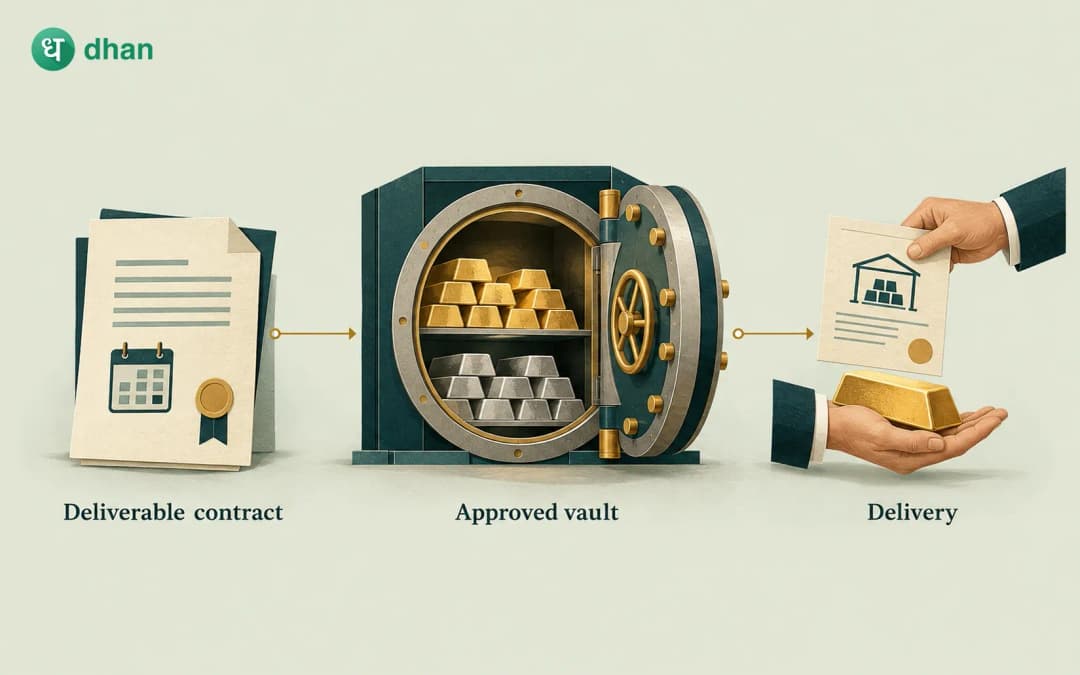
The physical delivery process on the MCX is regulated by the Multi Commodity Exchange Clearing Corporation Limited (MCXCCL). It follows the below-mentioned workflow:
Tender / Delivery period
When a contract is about to expire, it enters a tender period just a few days before the expiry date. From this point, all open positions in compulsory-delivery contracts are subject to delivery obligations if not squared off.
Declaration of delivery intention
Sellers declare their intention to deliver the commodity during the tender period; meanwhile, buyers declare their intention to receive physical delivery.
Intention matching
Buyers and sellers are matched based on the predefined allocation rules. If a long position holder does not close their positions till expiry, the exchange automatically assigns them to a seller based on the prescribed delivery rules.
Commodity delivered to approved warehouse
The selling party delivers the commodity to an MCX-approved vault or warehouse. MCX verifies the quantity and quality of the commodity according to the contract's standardised specifications.
COMRIS receipt issued
Upon verification, the MCX settlement system issues a Commodity Receipt, which is a warehouse receipt that proves ownership of the commodity stored at the vault. This Commodity Receipt gets credited in the trader's COMRIS account (Commodity Receipts Information System Account) like demat accounts for securities.
Fund settlement
The buyer pays the remaining contract value on the designated pay-in date. The seller receives the payment on the pay-out date. Then the buyer can visit the allocated vault with the COMRIS receipt and take delivery of the commodity.
Who actually takes Physical Delivery?
In reality, retail traders commonly square off their positions before the tender period starts. Physical delivery is often taken by:
- Jewellers and goldsmiths who use gold contracts to hedge purchases, then take delivery of gold bars at exchange-validated purity without buying them on the open market.
- Industrial manufacturers buy copper, zinc or aluminium via futures contracts and then take delivery to control procurement expenses and inventory.
- Agri-processors and traders use NCDEX and MCX agricultural contracts to lock in raw material costs and make a physical delivery of commodities such as cotton or mentha oil.
- High-net-worth retail investors or affluent individuals take physical delivery of gold/silver bars to accumulate physical bullion.
Charges associated with Physical Delivery in Commodity Trading
Beyond the commodity's price itself, taking or giving physical delivery involves several other costs like:
- Physical delivery brokerage: Fees charged by the broker for facilitating the delivery process.
- Warehousing charges: Daily storage fees at approved delivery centres.
- Assaying fees: Charges for third-party quality certification.
- Insurance premium: Insurance for the stored commodity.
- Logistics and handling: Transportation of commodities to or from the delivery centre.
- Financing cost: Buyers have to pay the full value of the commodity contract, not just the margin money.
- GST: Physical transfers attract Goods and Services Tax (GST).
How traders can avoid Physical Delivery?
For retail traders with no intention of taking physical delivery, here are a few key strategies to avoid physical delivery:
- Square off positions before the tender period: Close positions in advance of the tender period. This ends all physical delivery commitments.
- Roll over to the next contract month: Close the current month's contract and open a new position in the next month's contract. This helps maintain market exposure without delivery risk in the current contract.
- Track contract expiration dates: Track last trading dates, tender dates and expiration dates of all open contracts to close positions before the tender period begins.
- Use alerts and RMS: Set expiry alerts, margin warnings and auto square-off on your trading app. Traders can use platforms like Dhan to receive push notifications before the tender period, helping them exit on time.
The bottom line
Physical delivery bridges paper-based derivatives markets and the real-world economy. It offers manufacturers, refiners, and farmers stability, price transparency, and risk-hedging options, but it requires careful attention as well from the trader who wants to avoid taking physical delivery.
Understanding MCX contract specifications, the time frame of the tender period, squaring off/roll over trades before the tender period and keeping up with updates on regulatory changes can allow traders to navigate the commodity market with confidence and accuracy.
FAQs
What is physical delivery in commodity trading?
Physical delivery is a settlement method in which the seller delivers the underlying physical commodity to the buyer at the end of the contract, rather than the buyer paying the price difference for the contract settlement.
Does every commodity contract on MCX require physical delivery?
No. Different commodity contracts on MCX have distinct specifications. Some contracts (like crude oil) are cash-settled, while many base metals (copper, zinc), bullion (gold, silver), and selected agricultural contracts are subject to compulsory physical delivery obligations upon expiry.
What happens if I hold a buy position in a deliverable contract until expiry?
In a compulsory-delivery contract, if you hold a long (buy) position until its expiry without squaring it off, you are obligated to take physical delivery by paying the remaining amount.
How can retail traders avoid physical delivery obligations?
Retail traders and speculators can avoid physical delivery by squaring off their open futures positions or rolling them over to the next contract month before the tender period begins.
What is the tender period?
The tender period is the window just before a futures contract expires during which traders declare their physical delivery intentions. During this period, buyers and sellers declare their delivery intentions.